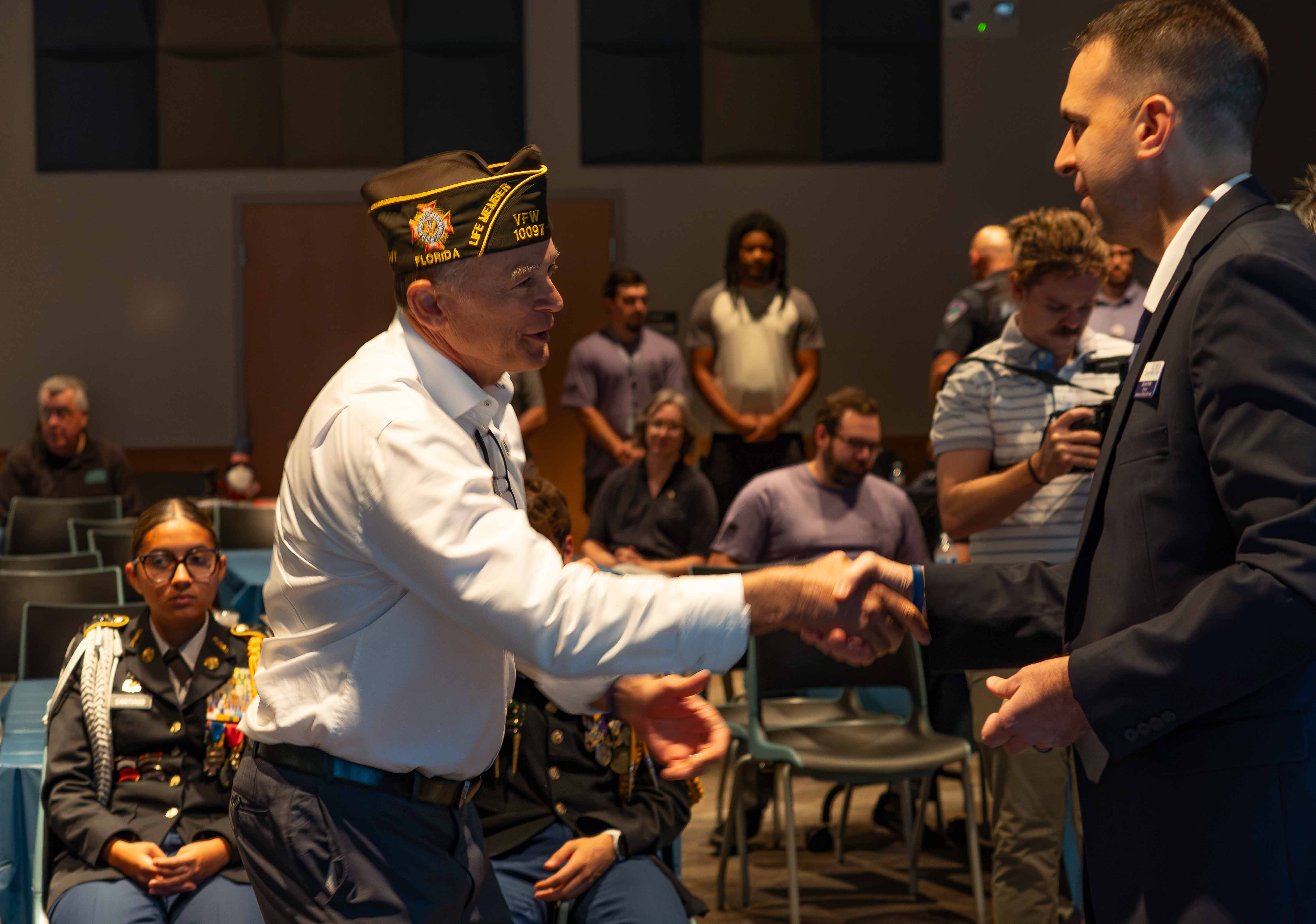
Top Left: Veterans in attendance were recognized by their respective military branches and presented with commemorative coins in honor of their service.
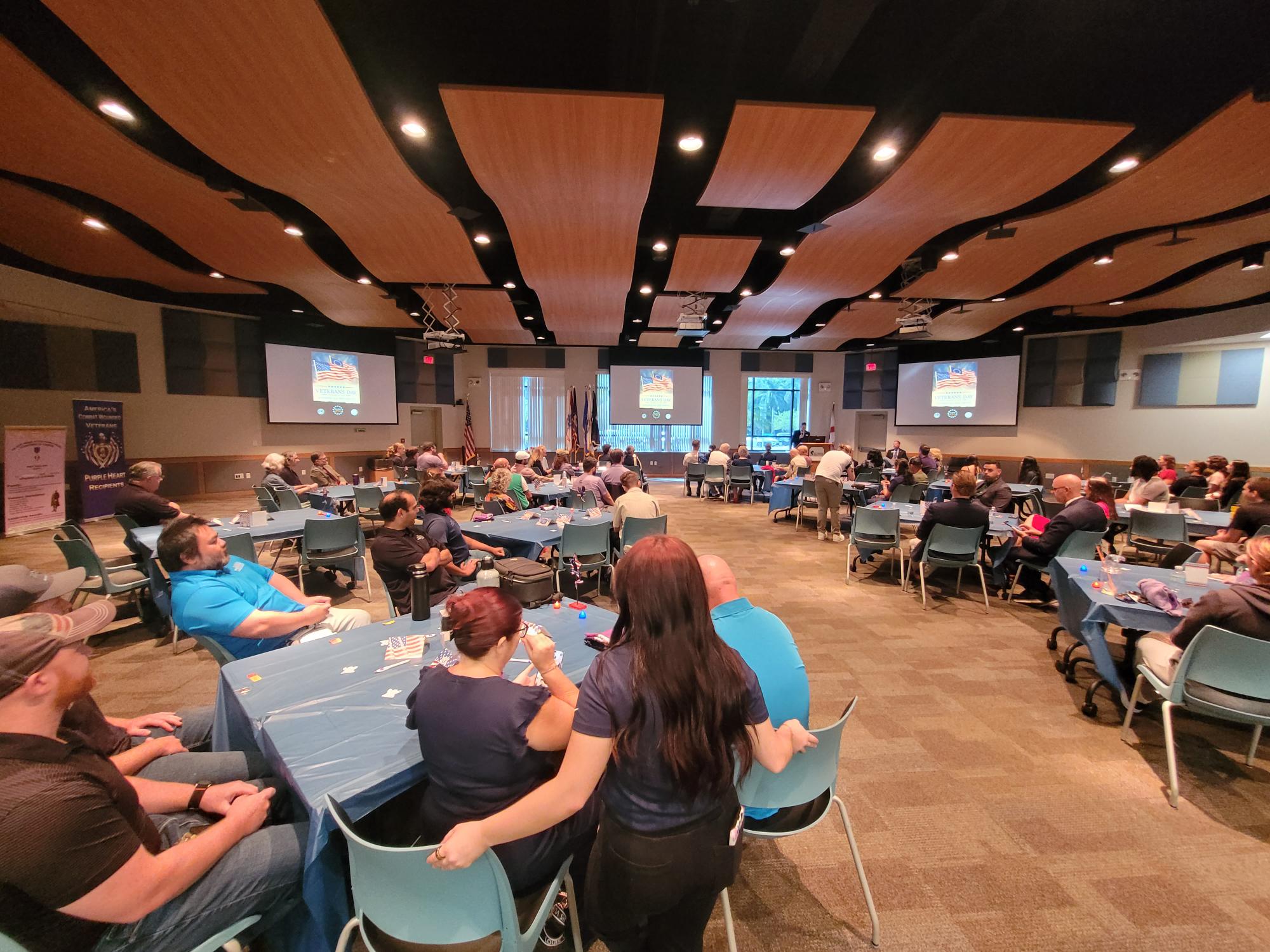
Top Right: Veterans from across the FSW community, including faculty, staff and students, gathered for the ceremony.
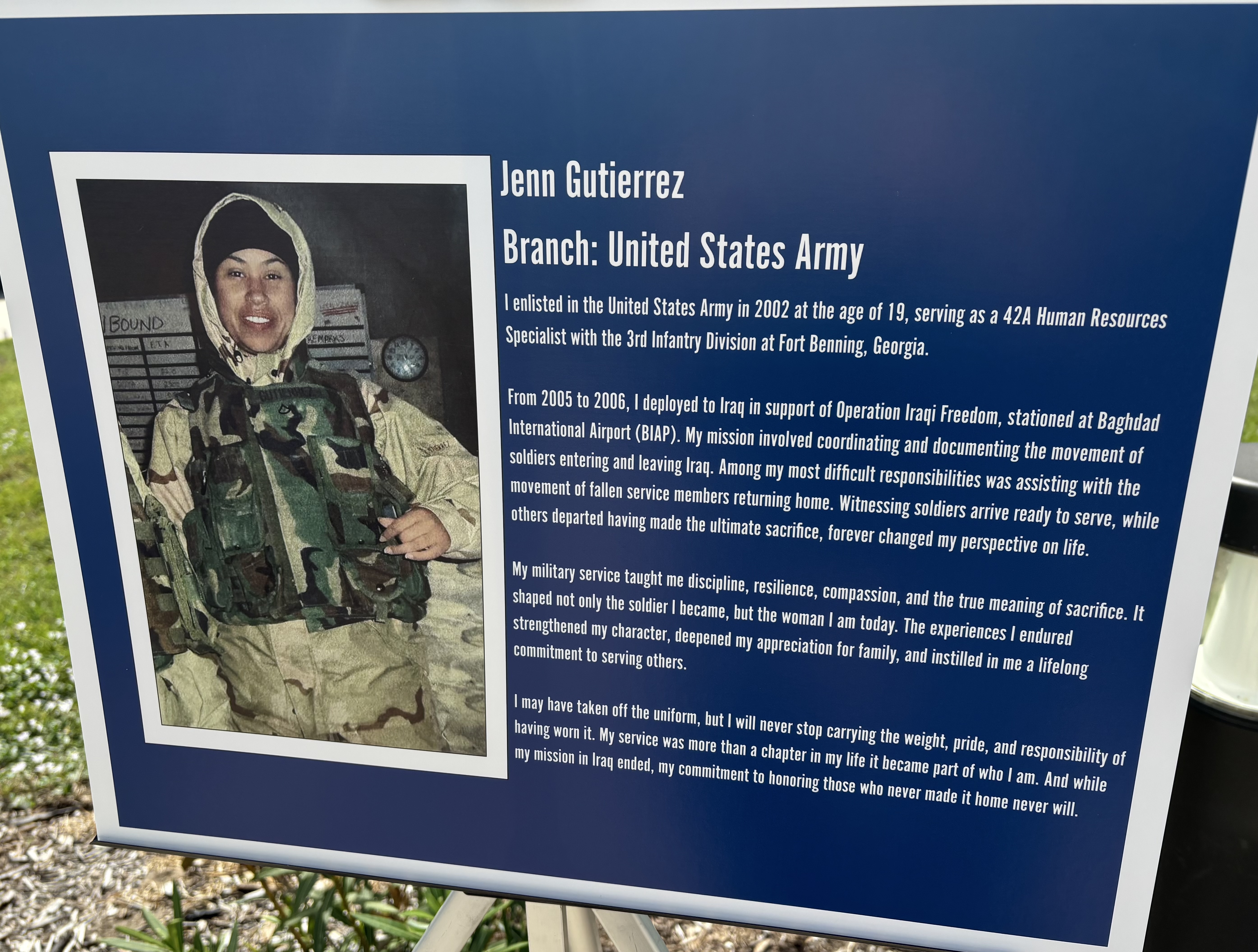
Bottom Left: Storyboards were displayed across campus, sharing the stories of veterans whose lives and service are connected to the FSW community and honoring their contributions.
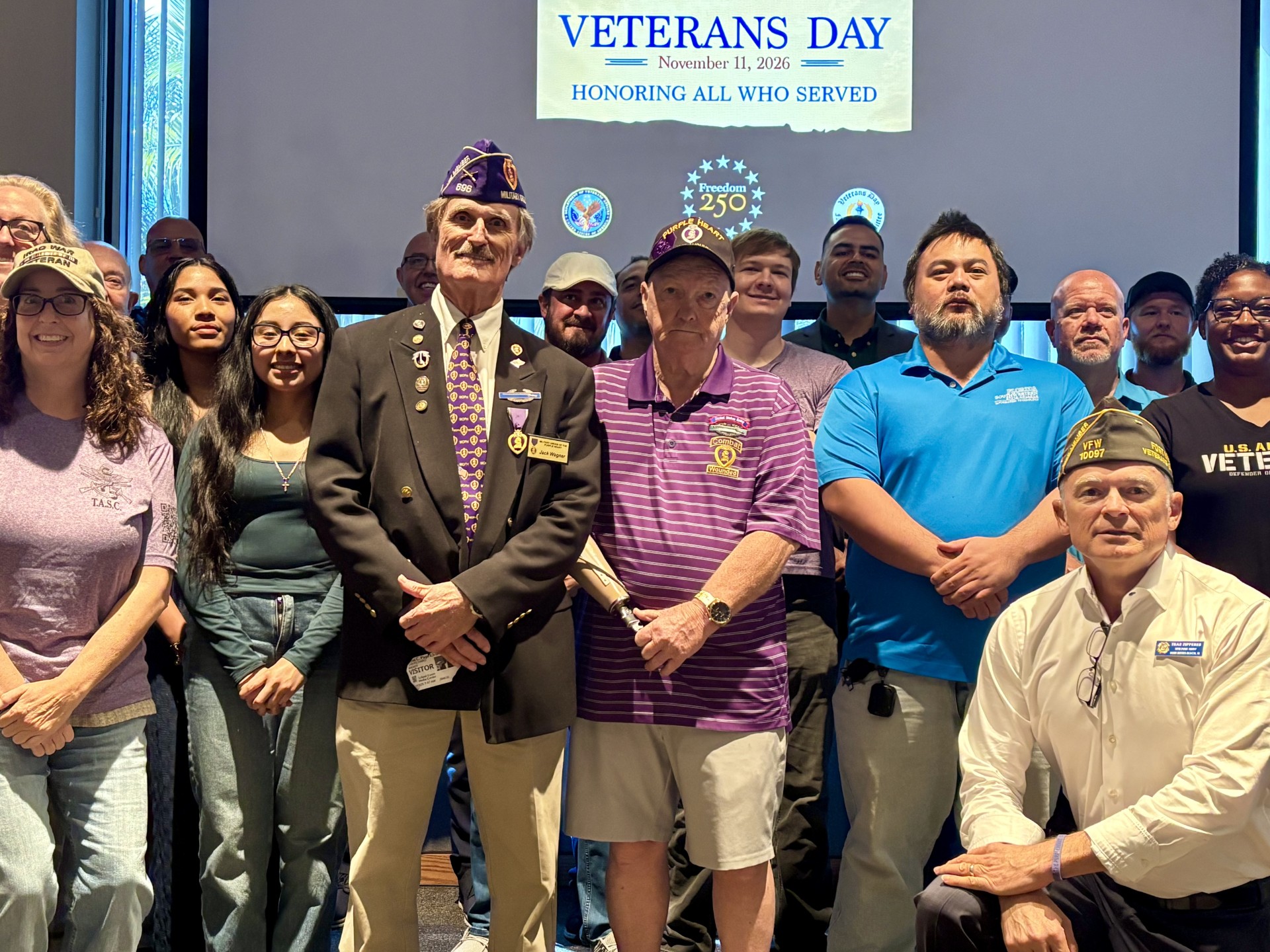
Bottom Right: Veterans in attendance joined FSW President Dr. Jeffrey Allbritten for a group photo following the ceremony.
As the nation pauses to honor those who have served, Florida SouthWestern State College (FSW) is celebrating a new distinction that reflects its ongoing commitment to veterans, active-duty service members and military-connected families.
FSW has received the Purple Star Campus Designation from the state of Florida, recognizing the college’s efforts to support military students and families as they transition into the college environment.
“Today, we honor that service,” FSW President Dr. Jeffery S. Allbritten said. “But honoring veterans cannot be something we do once a year; it must be reflected in what we do every day. I believe that those who serve our country deserve to be served by us now.”
The Purple Star Campus Designation is awarded to institutions that demonstrate a strong commitment to serving military-connected students. As part of the designation process, FSW met criteria that include having a dedicated military liaison, maintaining a military webpage with accessible information, offering a student-led transition program, providing professional development for faculty and staff on issues related to military students, and offering priority registration for military students and their families.
The new designation adds to FSW’s long-standing record of support for veterans and military-connected students. FSW was the first state college in Southwest Florida to receive the Purple Heart Campus designation, which it renewed last month. The college has also been named a Best for Vets College by Military Times for four consecutive years and holds Silver Status as a Military Friendly School. FSW has also been recognized as a Military Friendly Spouse School and named a Top Online College for Military Students by Newsweek. “These recognitions matter because they speak to a consistent commitment and a culture of service,” Allbritten said. “I am proud to say that FSW has a long tradition of excellence when it comes to supporting veterans and military-connected students.”
FSW’s Office of Veteran Services assists active-duty service members, veterans, dependents and military spouses with GI Bill benefits, tuition assistance, academic advising and the transition to college life. Staff members serve as certifying officials and help students navigate programs such as the Post-9/11 GI Bill, Montgomery GI Bill and Veteran Readiness and Employment.
“FSW stands out in supporting veteran students because it goes beyond simply processing GI Bill benefits and focuses on helping veterans successfully transition from military life to college life,” said Steven Felter, director of Veteran Services at FSW. “The office provides a central point of support for military-connected students as they pursue their educational goals.”
For Marine Corps veteran Nathan Swanson, that support helped him take the next step after military service. Swanson enlisted in the United States Marine Corps after high school in 2018 and served until 2022. While in the Marine Corps, he was a chemical, biological, radiological and nuclear defense specialist for Marine Air Group 11 at Marine Corps Air Station Miramar in San Diego. His role included helping ensure Marines were prepared for CBRN threats through training, qualifications and readiness exercises.
After leaving the Marine Corps, Swanson worked in several fields, including closet installation, shipping and receiving, and inventory management. Although the jobs provided a change of pace, he said he felt he was not fully using the skills and experience he gained in the military.
Family, friends, his fiancée and his priest encouraged him to use his GI Bill benefits. A friend recommended FSW and helped him through the application process.
“After that, the pace at which things happened from acceptance to registering for classes felt like it was a sign I was on the right path,” Swanson said. “Without the encouragement and support of those important to me, I don’t think I would have tried to further my education.”
Swanson is now enrolled in FSW’s Public Safety Administration program with the goal of becoming a safety specialist. He said he hopes to use the knowledge and training he gained in hazardous materials operations, nuclear emergency operations, occupational health and safety, and emergency crisis management.
He is also part of the work-study program in the Office of Veteran Services, where he greets and assists other veterans who come into the office.
“The advice I would give other veterans looking at continuing their education would be to take that first step,” Swanson said. “You had already made an immense decision that not many others make by having served in the military. There are benefits which you are entitled to for having served. Use those benefits.”
Swanson said FSW helps veterans recognize the value of their military experience while connecting them with academic and career pathways.
“Resources such as the Career Connection Center can help you to find a career in something that best matches you as an individual,” he said. “Taking into account all of your strengths and the unique experiences you bring to a table, then matching that to a degree program which would help you in entering that found career field. The Office of Veteran Services and all those therein will be there to help you during the course of this new mission you have undertaken.” FSW also offers opportunities for military-connected students to build relationships through Troops and Student Connect, or TASC, a student organization that connects members with community and academic resources while fostering camaraderie among fellow students.
For Marine Corps veteran Chase Lopez, FSW became more than a place to earn a degree. It became a community.
“What I really liked about the professors here was that they were very hands-on,” Lopez said. “They were willing to teach you more than just what you needed to know to pass the class. I also liked that FSW wasn’t too big or too small. It was just right. It really felt like a second home to me.”
That sense of belonging is central to FSW’s approach to serving veterans. Many FSW faulty and staff are veterans themselves, including Athletic Director Kevin Lynum.
“Transitioning from military service to college is a significant adjustment,” explained Lynum. “You go from an environment where structure, purpose and camaraderie are part of your everyday life to navigating an entirely new experience. What FSW does so well is recognize that transition and make veterans feel welcome, supported and valued. From the resources available to the people who take the time to understand our experiences, FSW shows that being veteran-friendly is about more than a designation. It is about making sure those who served know they have a place here and the support they need to succeed.”
FSW’s veteran-friendly culture is visible in the people, resources and support available to students.
“From the resources available to the people who take the time to understand our experiences, FSW shows that being veteran-friendly is about more than a designation,” Swanson said. “It is about making sure those who served know they have a place here and the support they need to succeed.”
As FSW marks Veterans Day, the Purple Star Campus Designation serves as another reflection of the college’s mission to support those who have served — not just on one day, but throughout the year.
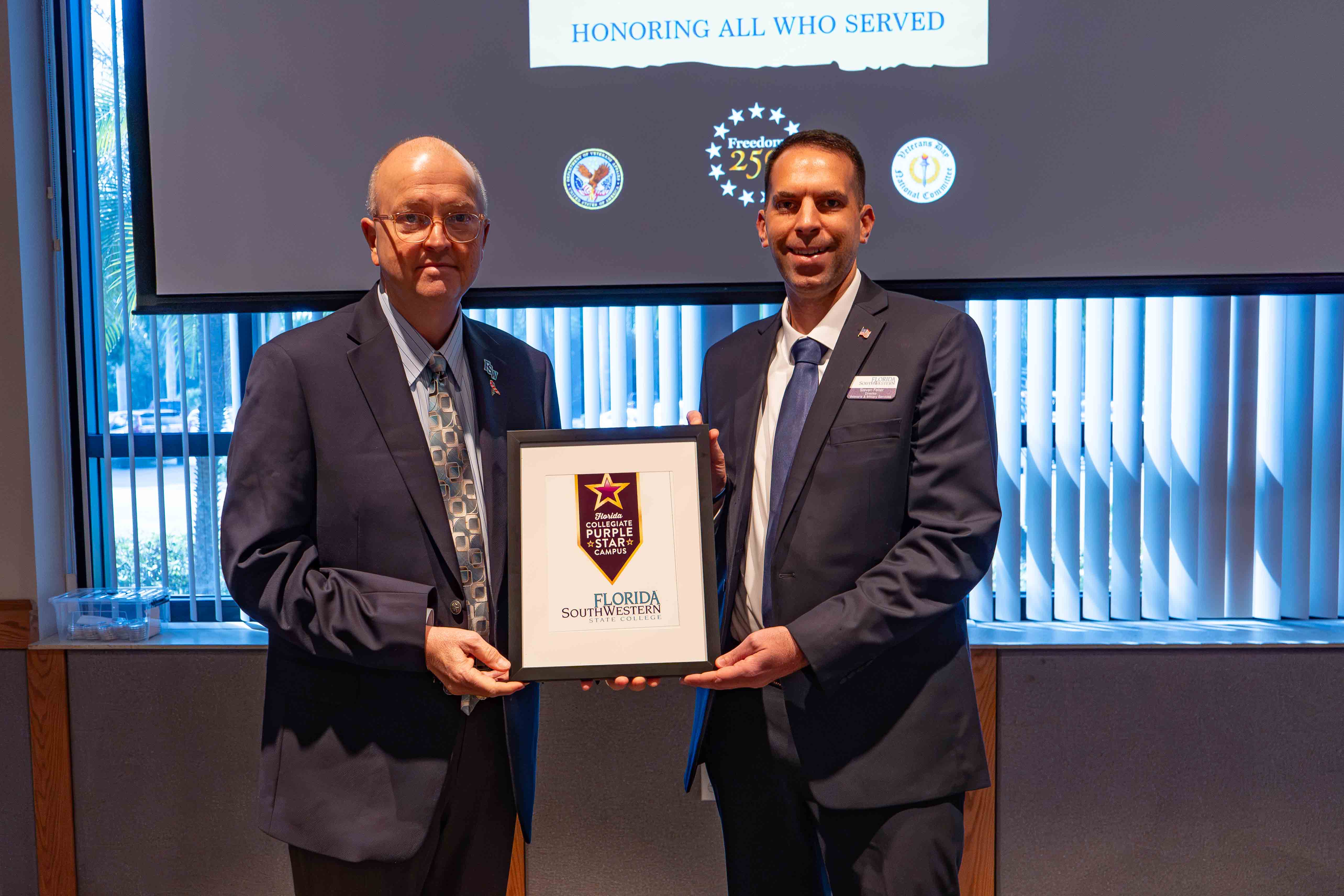
Left: President Allbritten presents Steve Felter, director of Veteran Services at FSW, with the Purple Star designation.
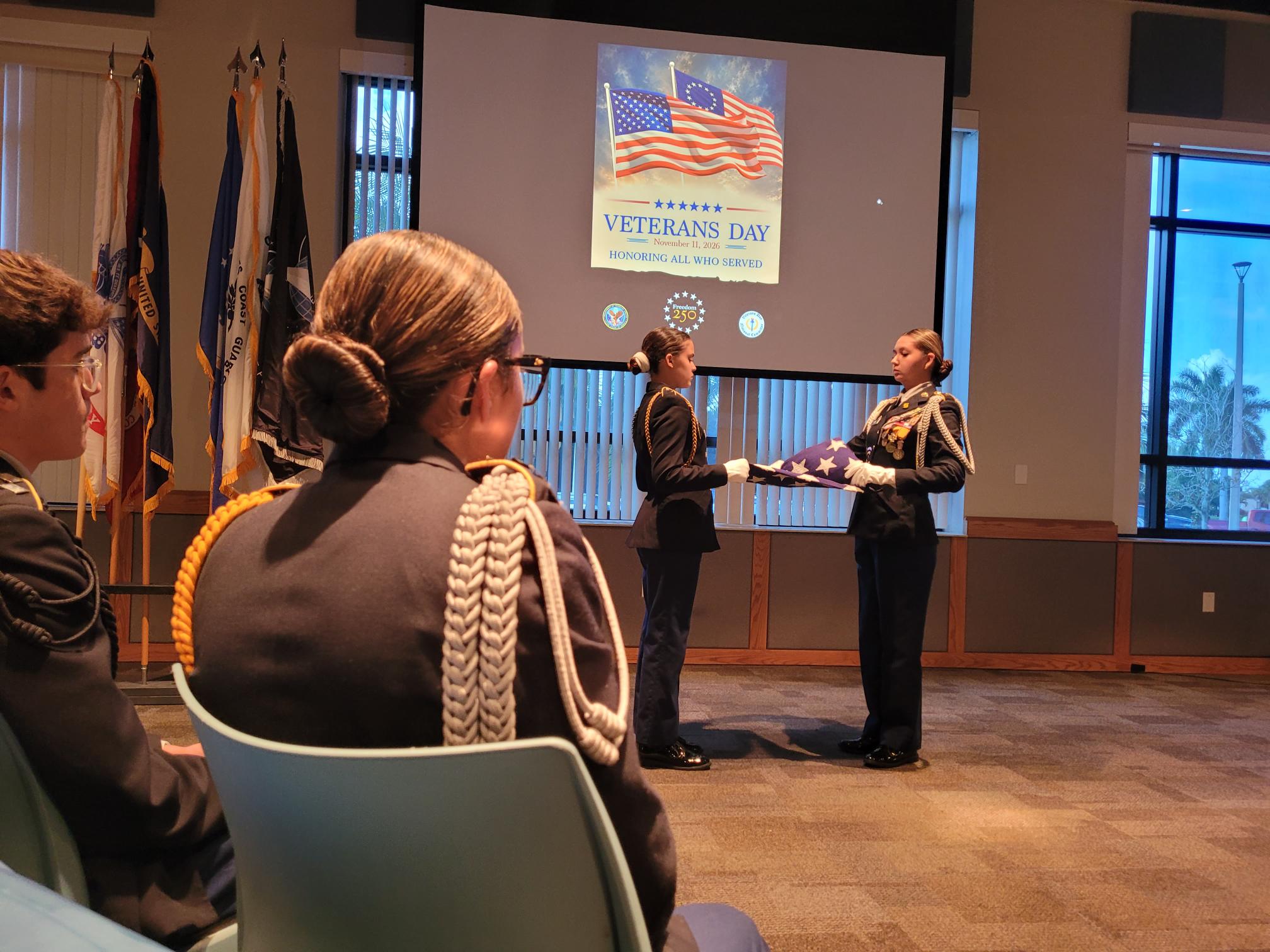
Right: The ceremonial folding of the American flag was accompanied by an explanation of the symbolism and meaning behind each of its 13 folds, honoring the nation’s history and those who have served.