
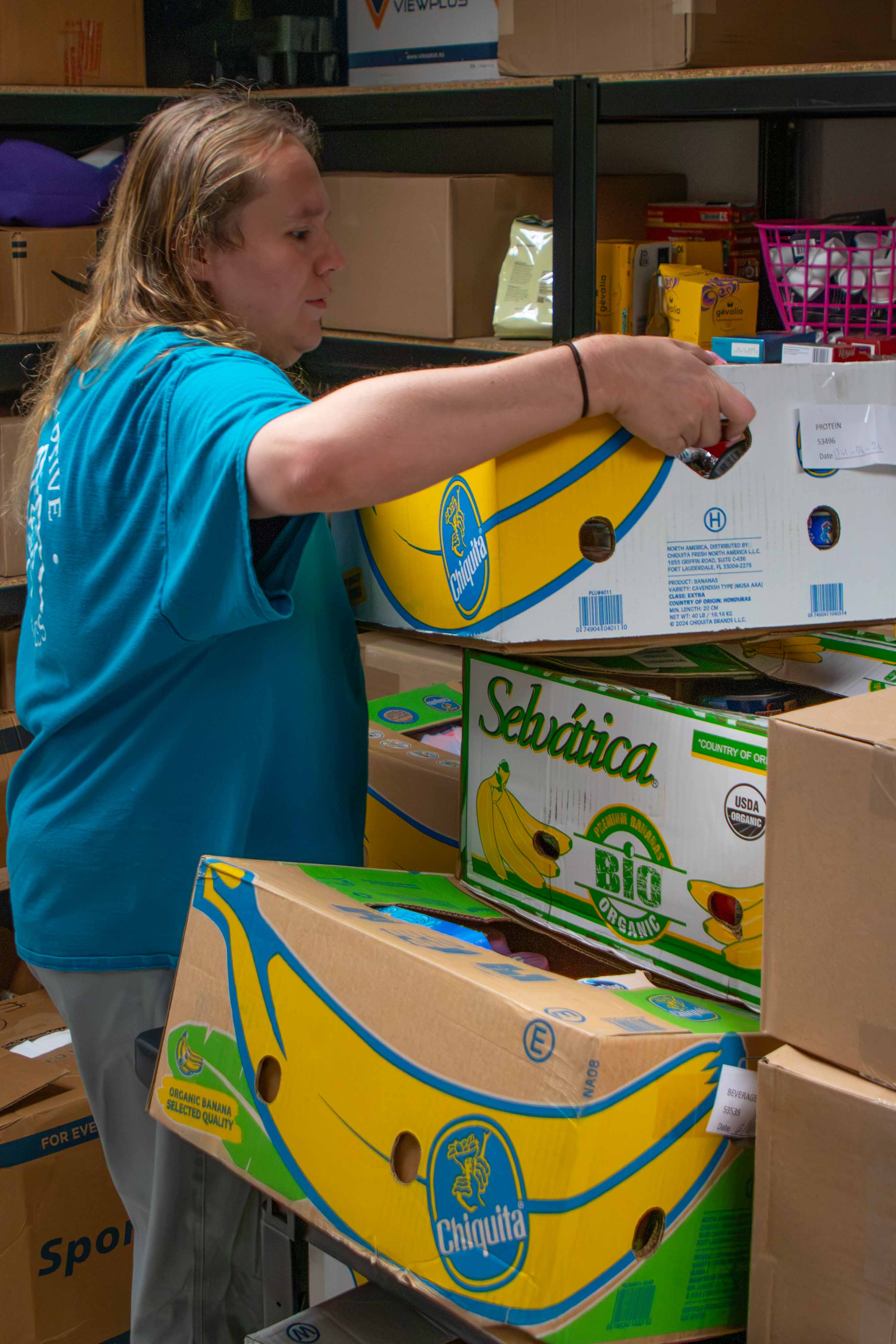

Top Left: A delivery from Harry Chapin Food Bank arrives to support the FSW Care Pantries, which provide food assistance to students at all four campus locations.
Top Right: Staff and volunteers unload a shipment of donated food from Harry Chapin Food Bank to restock the FSW Care Pantry.
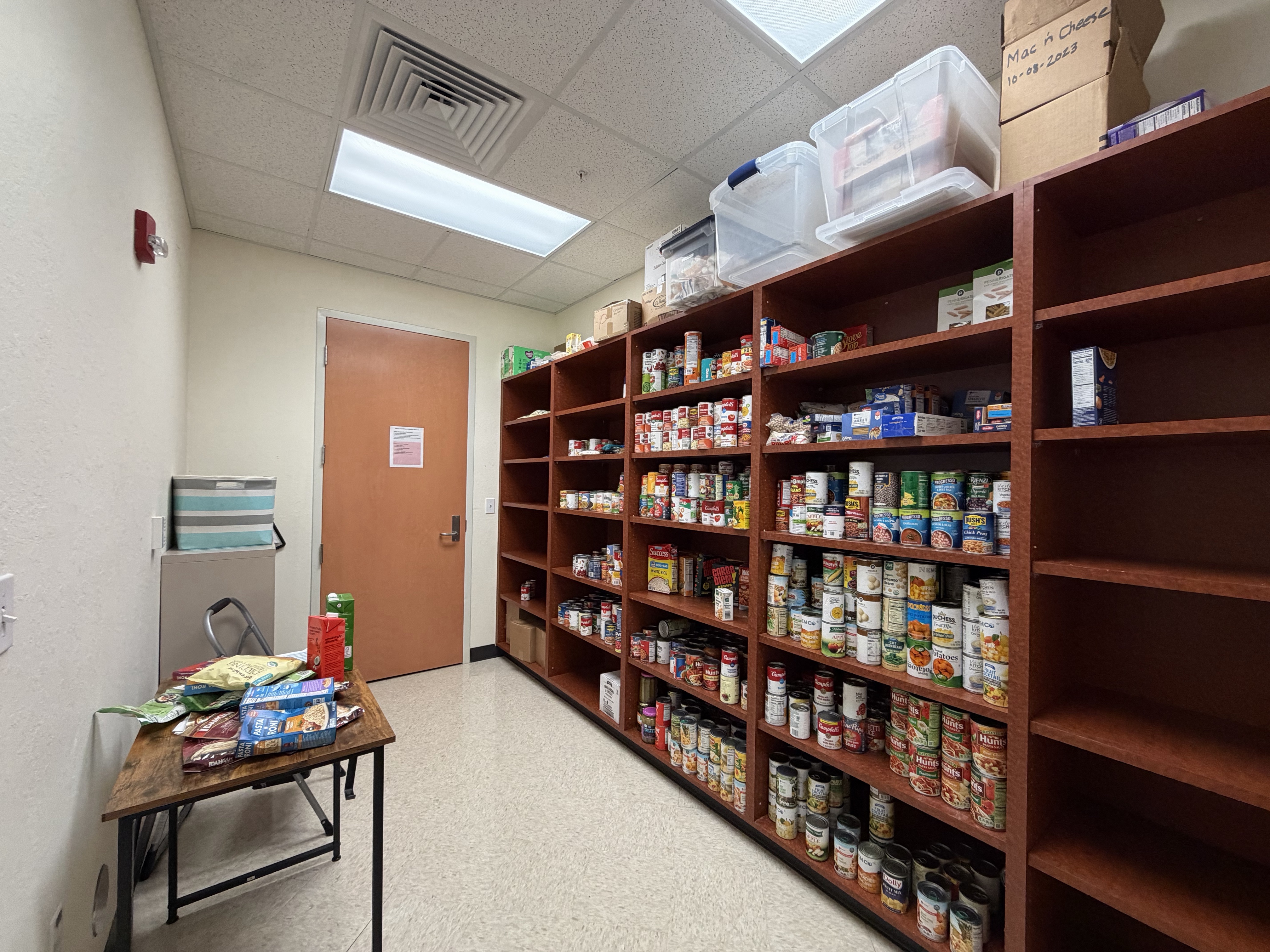
Bottom Left: The FSW Care Pantry at the college's Collier Campus provides students with access to food assistance.
Bottom Right: A recent report from AFC Serves, presented last week, highlights student food insecurity across all 28 public colleges in the Florida College System.
As Thanksgiving approaches and families prepare to gather around the table, Florida SouthWestern State College (FSW) is continuing its commitment to making sure students have access to food and other essentials. FSW operates a Care Pantry at every campus, providing year-round support to students facing food insecurity and the financial pressures of attending college.
The need for that support continues to grow. During the 2025-26 academic year, FSW's Care Pantries served 4,242 students across the college's locations, and the academic year is not over. Student use of the pantries has increased 1,496% since fall 2023. The challenge extends well beyond FSW. Nationally, about 40% of college students experience food insecurity, according to Swipe Out Hunger. In Florida, the Association of Florida Colleges is addressing the issue through AFC Serves, a year-round statewide service initiative focused on fighting student food insecurity across all 28 public colleges in the Florida College System.
For Ashley LeBlanc, a full-time FSW student, the pantry has made a meaningful difference in her ability to stay in school while managing her household expenses.
"It's difficult to also work full time, so my paycheck goes straight to paying my bills," LeBlanc said. "It's hard right now, and the pantry relieves at least one worry for me."
LeBlanc, who made the Dean's List in the spring 2026 semester, relies on the pantry for groceries and everyday necessities. Without a car, getting to a grocery store can be especially challenging."Paper towels, toilet paper and toothpaste are all really expensive, so I'm grateful for the toiletries the pantry offers, as well as foods like rice and beans, which are a staple for me," she said. "And it's nice to get a little treat or a dessert sometimes too."
For students attending a mostly commuter college that serves five counties, the cost of food, housing and transportation can create additional challenges. Those pressures can make it difficult to concentrate on coursework when basic needs are not being met.
"Students facing food insecurity can't focus on their classes when they're worrying about where their next meal is coming from," said Dr. Laura West, a human nutrition professor at FSW. "Campus food pantries help give students the nutrition they need to engage in their education, thrive in college and continue progressing toward graduation."
FSW's Care Pantries offer canned and boxed foods, cereal, condiments, fresh and frozen foods, meat and personal-care items. Students can visit daily using their Buc Card and take home two grocery bags and two meat items. Snacks are also available for students to grab between classes.
“A student’s success shouldn’t depend on what’s in the refrigerator or what’s left in the budget after the bills are paid," said FSW President Jeff Allbritten. "When students are worried about their next meal, it’s hard to focus on their education. That’s why we operate Care Pantries at every FSW campus, so students have access to food and essential household items year-round and can put their energy on learning and reaching their goals."
The college is expanding its partnership with Harry Chapin Food Bank, with the Charlotte and Collier campuses serving as distribution sites for fresh food and groceries. The Charlotte Campus also delivers a portion of that food to the Hendry/Glades Center in LaBelle. Additional support from Community Cooperative, Suncoast Credit Union, the Harper Foundation, Galeana Auto and campus supply drives helps keep the pantries stocked. The Care Pantries are part of FSW's broader commitment to making college accessible and helping students remain enrolled. The college has not raised tuition since 2014, and financial aid, scholarships and work-study opportunities help ease the cost of earning a degree.
LeBlanc hopes other students who need assistance will take advantage of the resources available to them.
"It's OK if you need help," she said. "Other people are going through the same struggles. Embrace the resources that FSW provides for students."
FSW's commitment to student support continues throughout the year, not just during the holiday season. To learn more about Care Services and available resources, visit www.fsw.edu/careservices.