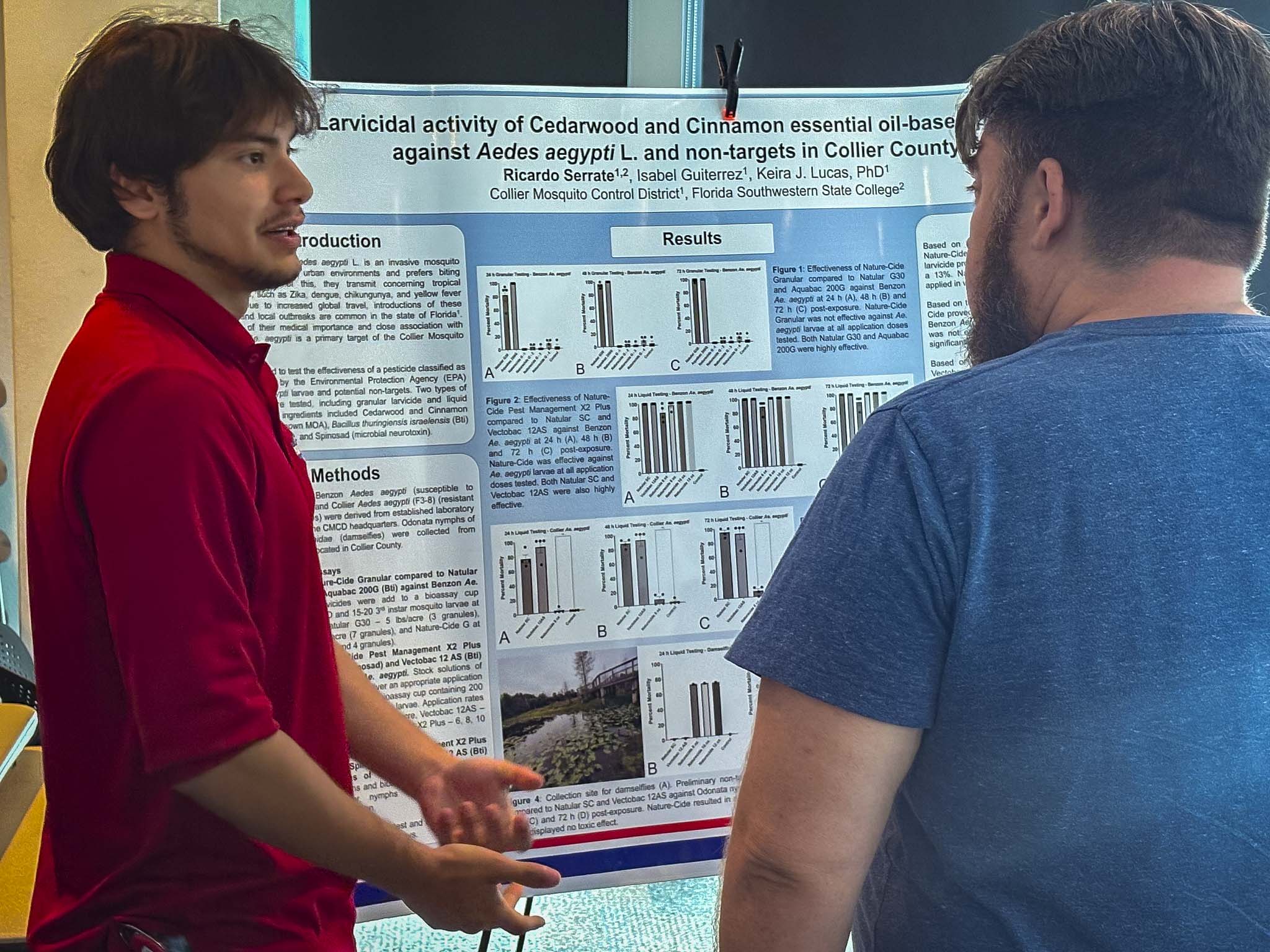
Top Left: FSW Student Ricardo Serrate-Chavez describing the research he is performing for the Collier Mosquito Control District.
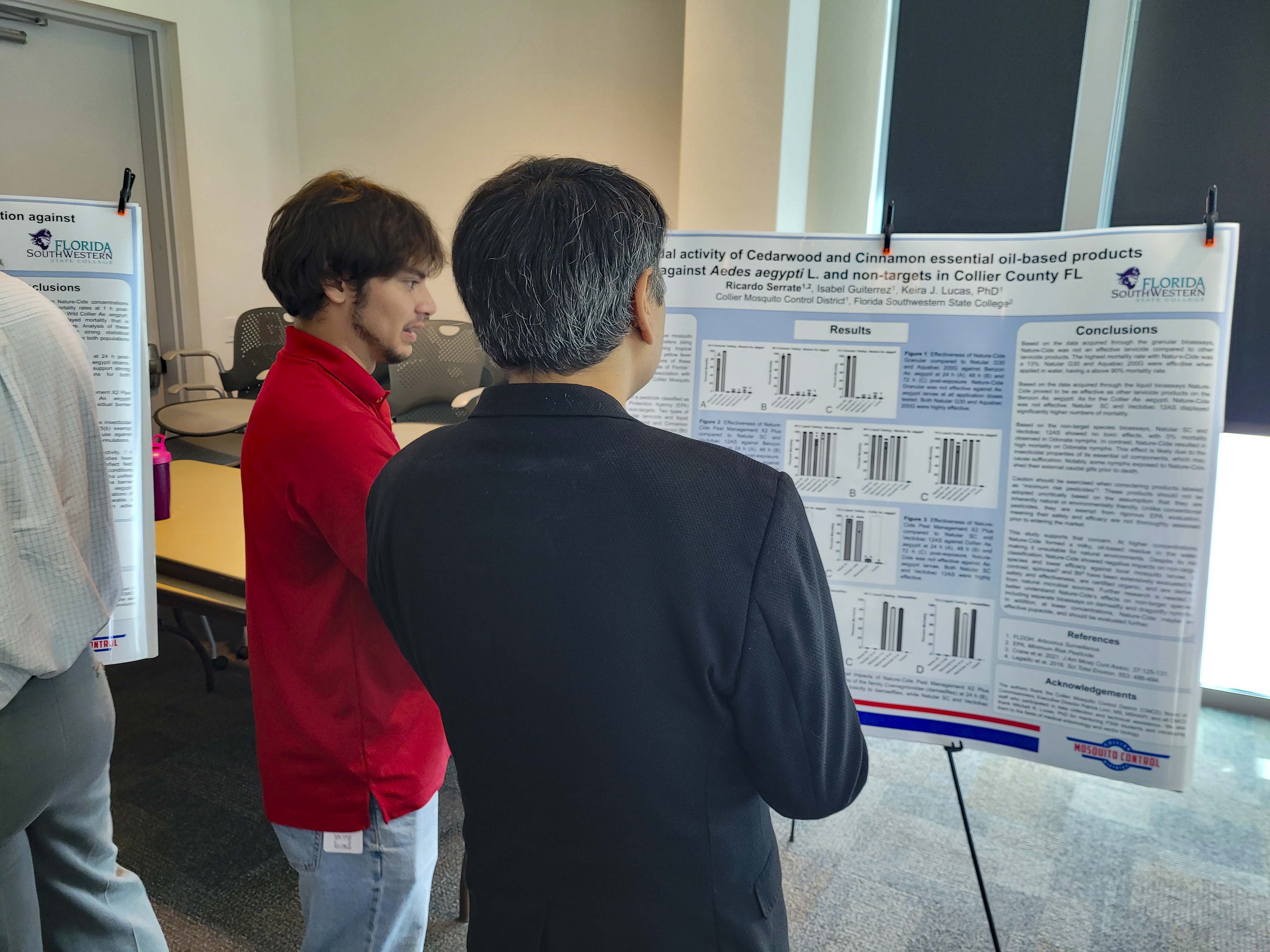
Top Right: Ricardo Serrate-Chavez earned the internship with the Collier Mosquito Control District, allowing him to transition from campus research into applied public health and environmental fieldwork.
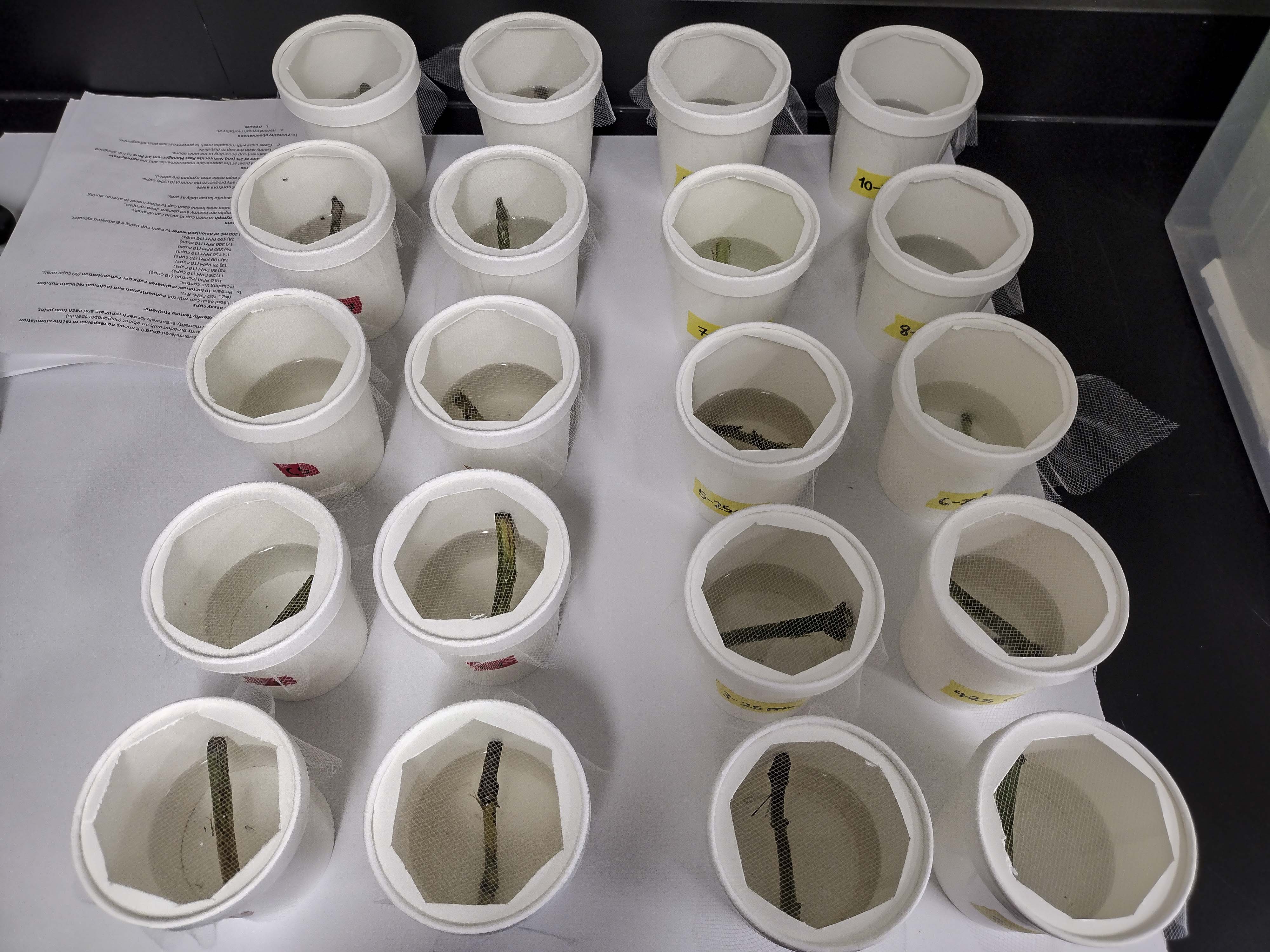
Bottom Left: Research specimens for mosquito analysis in a project led by FSW student Ricardo Serrate-Chavez.
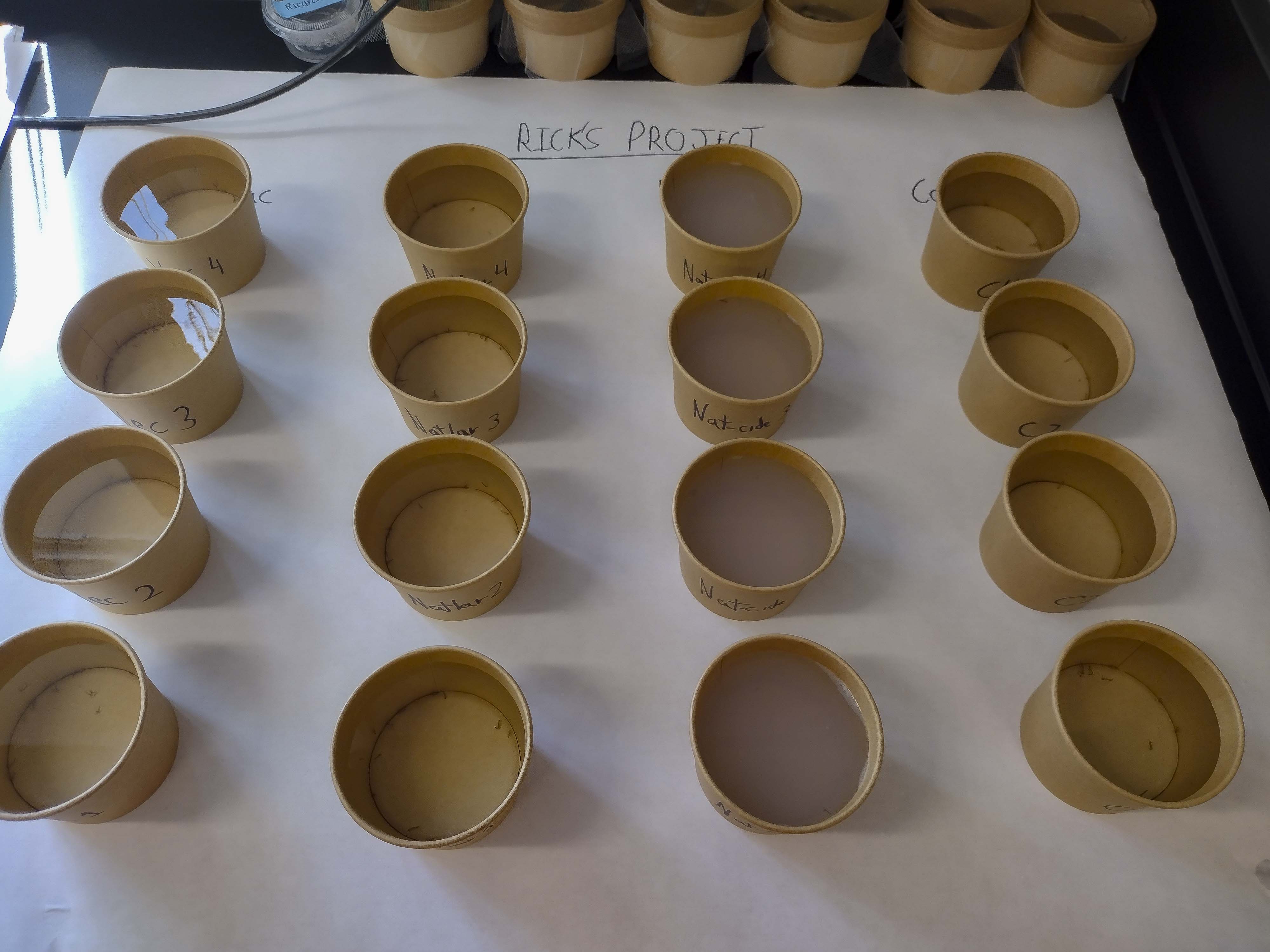
Bottom Right: Specimen samples used for mosquito testing in a student research project by Ricardo Serrate-Chavez.
As Southwest Florida enters the rainy season, seasonal showers arrive and mosquito populations begin to surge. Florida SouthWestern State College (FSW) students are stepping into roles that go far beyond traditional classroom learning. At FSW’s Collier Campus, students are conducting hands-on mosquito research in partnership with the Collier Mosquito Control District, gaining professional scientific experience while contributing to public health efforts that directly impact local communities. The student-led research program combines workforce training, environmental science and public service in one of the most ecologically significant regions in the country. “Southwest Florida has some of the most prolific mosquito habitats and the highest mosquito populations in the country,” said Dr. Mitchel Lucas, an FSW biology professor overseeing the research initiative. “Mosquitoes are not only a public nuisance but also potential disease vectors, which is why Florida has such a long history of mosquito control.” For FSW students, the research represents far more than an academic assignment. It is an opportunity to engage in meaningful scientific work that prepares them for careers in public health, environmental science, entomology and biological research. Building career-ready scientists This year’s student researchers contributed to different aspects of mosquito control and environmental monitoring, developing skills typically reserved for graduate-level or professional research environments. FSW students Vanessa Stantcheva and Lisbet Vidal conducted mosquito trapping and field collection work across the Collier Campus. After collecting samples, they used microscopy techniques to identify mosquito species, determine sex and analyze physical characteristics that help researchers better understand mosquito population dynamics in Southwest Florida. “I hope to gain a deeper understanding of the insect species that inhabit Florida, particularly mosquitoes,” said Vidal. “Understanding their anatomy, mating patterns and the diseases they can transmit is crucial. By studying their life cycle, we can minimize the dangers they pose and explore more effective pest control measures.” The students’ on-campus work provides valuable data that can help researchers understand how mosquito populations shift during the rainy season and how environmental conditions influence mosquito activity in Southwest Florida’s subtropical climate. Balancing mosquito control with environmental stewardship As researchers tracked mosquito activity across Southwest Florida, other students focused on protecting the ecosystems surrounding those populations. They examined insecticide efficacy and environmental stewardship, studying how mosquito control compounds interact not only with mosquitoes but also with native plants, pollinators and other organisms critical to Southwest Florida ecosystems. “I run bioassays, which are experiments to test the effectiveness of larvicides on mosquito larvae,” explained FSW student and Collier Mosquito Control District intern Ricardo Serrate-Chavez. “I also check the effects of these larvicides on non-target species like insects from the order Odonata, such as dragonflies and damselflies. We can’t use a larvicide or pesticide that will harm the environment or other animals. That’s why I’m testing dragonfly and damselfly nymphs, to help keep the ecosystem safe.” This research contributes to broader efforts to protect communities while preserving the ecosystems that define Southwest Florida, including habitats connected to the Everglades and coastal wetlands. It also reflects a growing emphasis within the scientific community on balancing effective mosquito control with environmental conservation. Research with community impact Mosquito control in Southwest Florida is about more than comfort; it is a public health priority. With diseases such as dengue fever, Zika and malaria continuing to pose global concerns, monitoring mosquito populations and developing environmentally responsible control methods remain critical, especially in regions with extensive wetlands and subtropical climates. For FSW students, that reality gives their work an added sense of purpose. The program also demonstrates FSW’s commitment to experiential learning opportunities that prepare students for in-demand STEM careers while serving the surrounding community. “My work with Collier Mosquito Control District is amazing, as I have always wanted to work in a laboratory,” said Serrate-Chavez. From student research to public service careers The partnership between FSW and the Collier Mosquito Control District is designed to do more than provide research opportunities — it creates direct workforce pathways for students interested in scientific and public service careers. Serrate-Chavez was selected for an internship with the district beginning in January, a highly competitive opportunity that allowed him to transition from campus research into applied public health and environmental fieldwork. “The students are a huge help in our research efforts at the district,” said Collier Mosquito Control District Internship Supervisor Dr. Brendan Riske. “They are involved in collecting samples, conducting trials on novel insecticides and identifying mosquitoes that may be vectors of disease in Florida.” Located minutes from FSW’s Collier Campus, the district has worked with students interested in public health and entomology for more than a decade. Through the partnership, students gain professional experience conducting field research, collecting samples, evaluating mosquito control methods and identifying mosquito species that may carry disease. The experience gives students the opportunity to contribute to work with real-world implications for millions of residents and visitors across Southwest Florida. Preparing the next generation Lucas plans to expand the mosquito research program during the 2026–27 academic year with a new cohort of student researchers. “Being a research student in Dr. Lucas’s lab was an amazing opportunity that I never expected to have here,” said Stantcheva. “Gaining hands-on lab experience and connecting with professionals in the field also helped me explore potential career pathways.” As Southwest Florida prepares for another rainy season, FSW students are already working behind the scenes, combining science, research and public service to help communities better understand and manage one of the region’s most persistent challenges. For these students, the research is more than an internship or laboratory exercise. It is career preparation with a direct impact on public health, environmental conservation and the future of Southwest Florida.