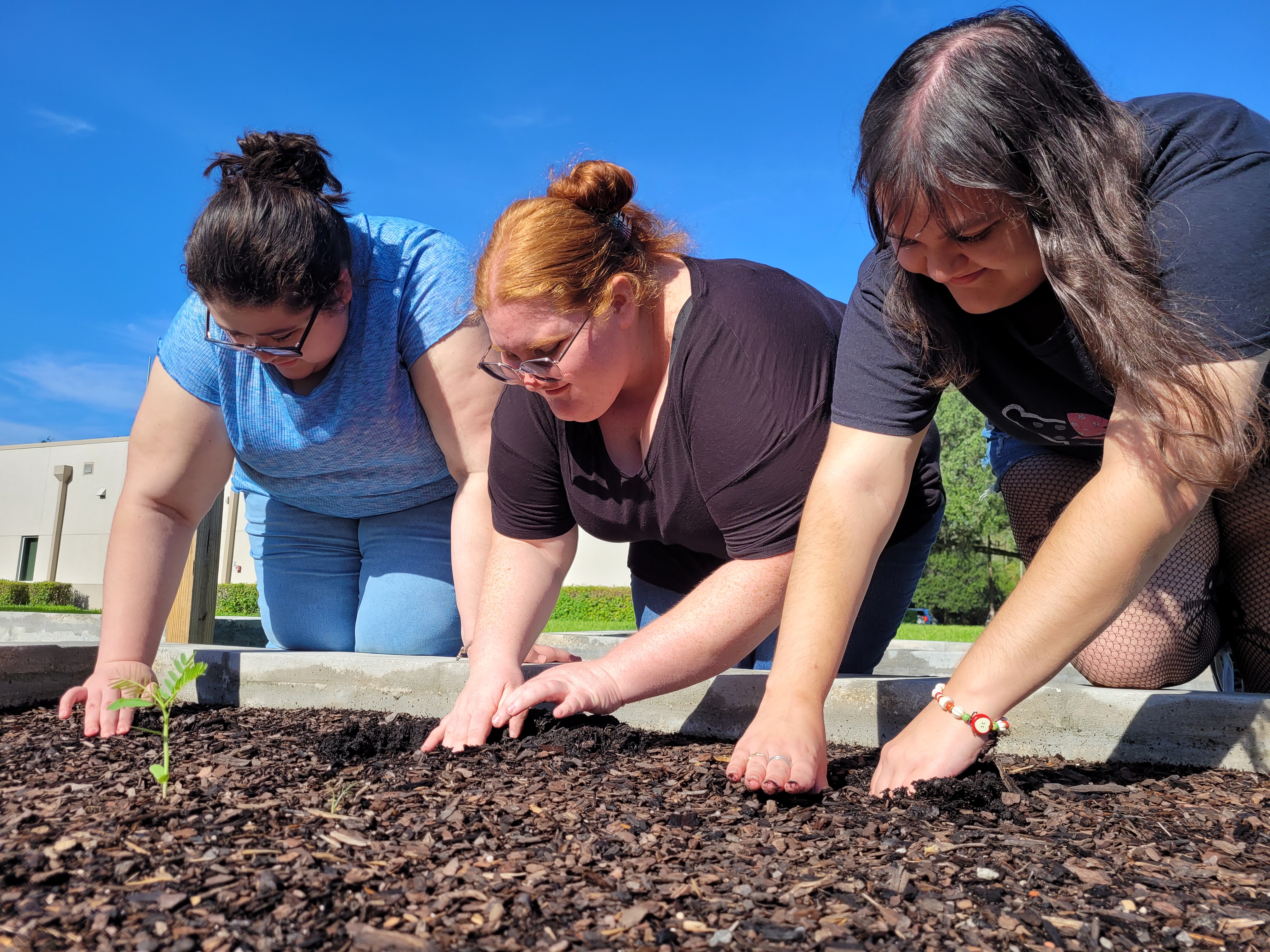
Top Left: Students experience a hands-in-the dirt approach along with classroom instruction on precision agriculture, agribusiness and soil science.
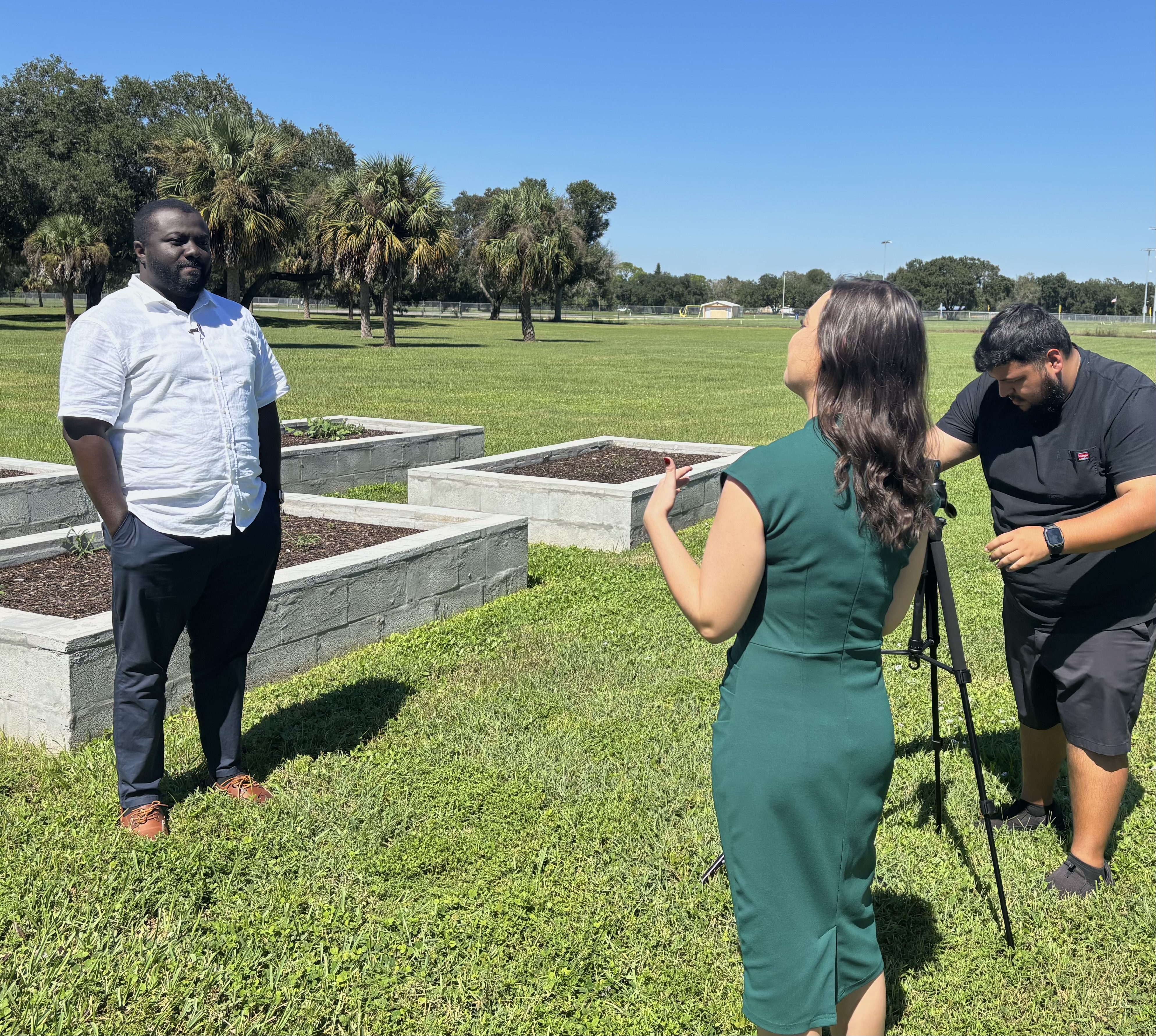
Top Right: Dr. Henry Akwah is interviewed by local media about how to keep the food chain sustainable and resilient.
Bottom Left: "Technology has also played a major role in shaping modern agriculture, making the industry more efficient, attractive, and, in many cases, safer and less hazardous for farmers," said Akwah.
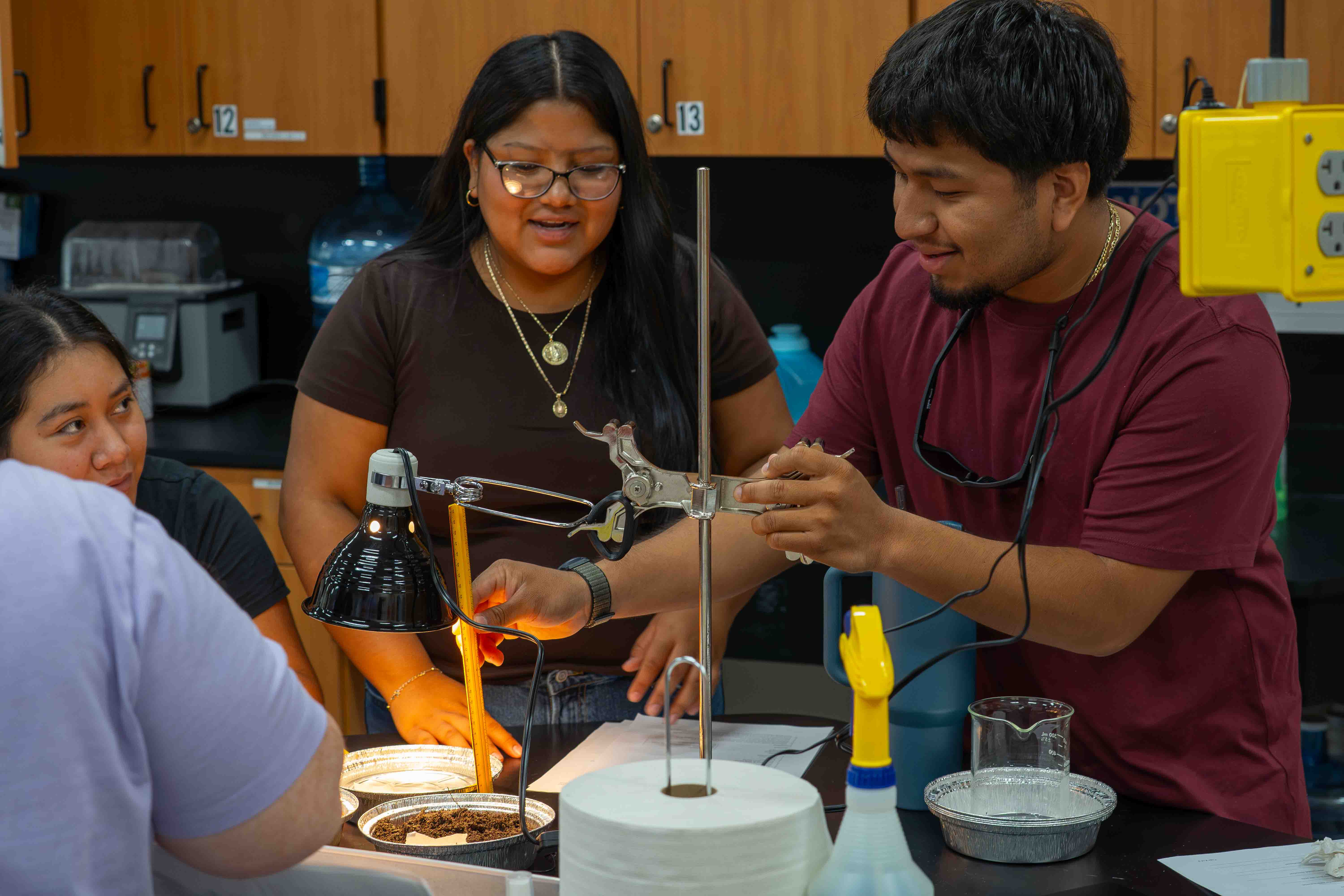
Bottom Right: By offering these courses locally, FSW is giving students an opportunity to build skills close to home and prepare for the workforce needs of the region.
As Florida’s agricultural industry faces an aging workforce and rapid technological change, Florida SouthWestern State College is expanding educational opportunities in one of Southwest Florida’s most important industries.
This fall, FSW launched new agriculture courses at its Hendry/Glades Curtis Center in LaBelle, creating a local pathway for students interested in agriculture, agribusiness, precision agriculture and emerging agricultural technologies.
FSW is uniquely positioned in the Florida Heartland region to offer students a hands-in-the-dirt approach to agriculture education, combining classroom instruction with practical, field-based learning experiences.
“Agriculture looks very different today than it did a generation ago,” said Dr. Henry Akwah, director of Agricultural Technology and Supply Chain Management at FSW. “Agriculture has evolved into a global agri-food system that feeds billions of people and is influenced by global markets, policies and supply chains. Agriculture has come a long way.”
The offerings at FSW respond to two critical needs facing the industry: preparing the next generation of agricultural professionals as more farmers approach retirement and equipping today’s workforce with the technology and business skills increasingly required in modern agriculture.
“These emerging technologies are not only changing the skills students will need to succeed in the industry, but they are also providing them with additional skills and tools that can help them address some of agriculture’s greatest challenges,” Akwah said.
One of those challenges is feeding a growing global population amid limited land and water resources. The central question: How can producers generate higher yields with existing resources? Akwah believes the answer lies in pairing traditional agricultural knowledge with modern technological tools that help optimize efficiency.
“The new agriculture curriculum reflects how dramatically the industry has changed,” Akwah explained. “Modern agriculture increasingly relies on continuous education and awareness, along with the integration of precision agriculture concepts that combine traditional agricultural knowledge with modern technologies such as geographic information systems (GIS), artificial intelligence (AI), sensors, drones, and data analytics.”
For Vanessa Cruz Vera, an Immokalee native, FSW’s new agriculture courses offer a chance to explore a career path she had not previously considered.
Cruz Vera is taking agribusiness this semester as she explores her interest in business and finance. She wanted to learn more about the business side of agriculture while also figuring out whether it could be part of her future.
“I’m interested in going into business, and I wanted to learn more about what agribusiness is all about,” Cruz Vera said. “Taking this course is giving me the opportunity to explore it and see if it’s something I would like to pursue or if I want to take my career in a different direction.”
FSW is offering Microcomputer Applications, Introduction to Soil Science, Introduction to Precision Agriculture and Principles of Agribusiness Management. The curriculum will expand in spring 2027 with courses in Profitability in Farming, Southwest Florida Farm Tours, Introduction to Environmental Science and Fundamentals of Geographic Information Systems, giving students opportunities to explore agriculture from its technology, environmental, business and hands-on perspectives.
The program was developed in response to the needs FSW sees throughout the region.
“Workforce readiness is at the heart of this initiative,” said Dr. Martin McClinton, associate vice president of Academic Affairs at FSW. “Agriculture is changing, and employers need people who understand both the fundamentals of the industry and the technology and business practices that are shaping its future. By offering these courses locally, we are giving students in this region an opportunity to build those skills close to home and prepare for the workforce needs of our region.”
The Hendry/Glades region serves as the agricultural heart of Southwest Florida, where agriculture remains a major economic driver. At the same time, rural communities throughout the region face workforce development challenges and limited access to higher education and specialized training.
FSW President Jeff Allbritten said expanding agriculture education is part of the college’s broader commitment to workforce development and strengthening the communities it serves.
“FSW is committed to listening to our communities and responding to the workforce needs we hear from employers and our business advisory councils,” Allbritten said. “Expanding agriculture education at FSW’s Hendry/Glades Curtis Center is one way we are creating new pathways for students while helping prepare the skilled workforce Southwest Florida needs.”
The initiative also reflects the broader importance of agriculture to Florida. Florida Commissioner of Agriculture Wilton Simpson declared 2026 as “The Year of the Farmer,” recognizing the essential role farmers play in the state’s economy and food supply. The Rural and Family Lands Protection Program received $425 million to support efforts to protect working agricultural land from development.
For FSW, the investment in agriculture education is an investment in the future of Southwest Florida, where learning takes root.
For more information, visit: www.fsw.edu/agriclasses