Enrollment Executive Summaries
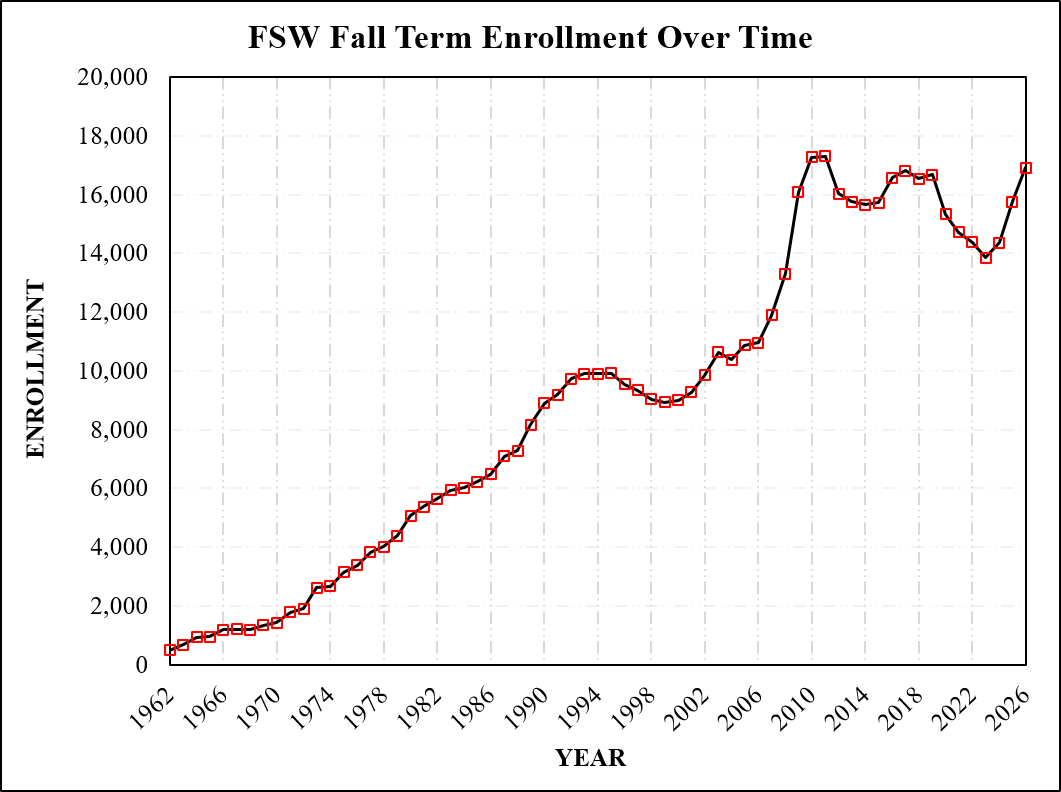
FSW Fall Enrollment: 1962-2026
Fall 2026 Top 10 Enrolled Programs
| Rank | Program Title | Rank Change Fall 2025 to Fall 2026 | Years in Top Ten in the Last Ten Years | Percent of Total Fall 2026 Enrollment | Student Count |
|---|---|---|---|---|---|
| 1 | AA General Studies | = | 10 | 69.2% | 11,706 |
| 2 | AS Nursing | = | 10 | 4.0% | 673 |
| 3 | AS Business Administration & Management | = | 10 | 2.4% | 412 |
| 4 | BS Nursing | = | 9 | 2.0% | 330 |
| 5 | AS Science and Engineering Technology | +1 | 9 | 1.7% | 281 |
| 6 | BAS Supervision and Management | -1 | 10 | 1.6% | 275 |
| 7 | AS Cybersecurity Operations | = | 3 | 1.3% | 221 |
| 8 | AS Social and Human Services | * | 1 | 1.2% | 209 |
| 9 | AS Digital Art & Multimedia Production | * | 4 | 1.0% | 176 |
| 10 | AS Architectural Design & Construction Technology | * | 1 | 0.9% | 157 |
These numbers reflect primary majors within each respective program.
Data Sources: Frozen Fall Enrollment Summaries.
* = was not previously ranked.
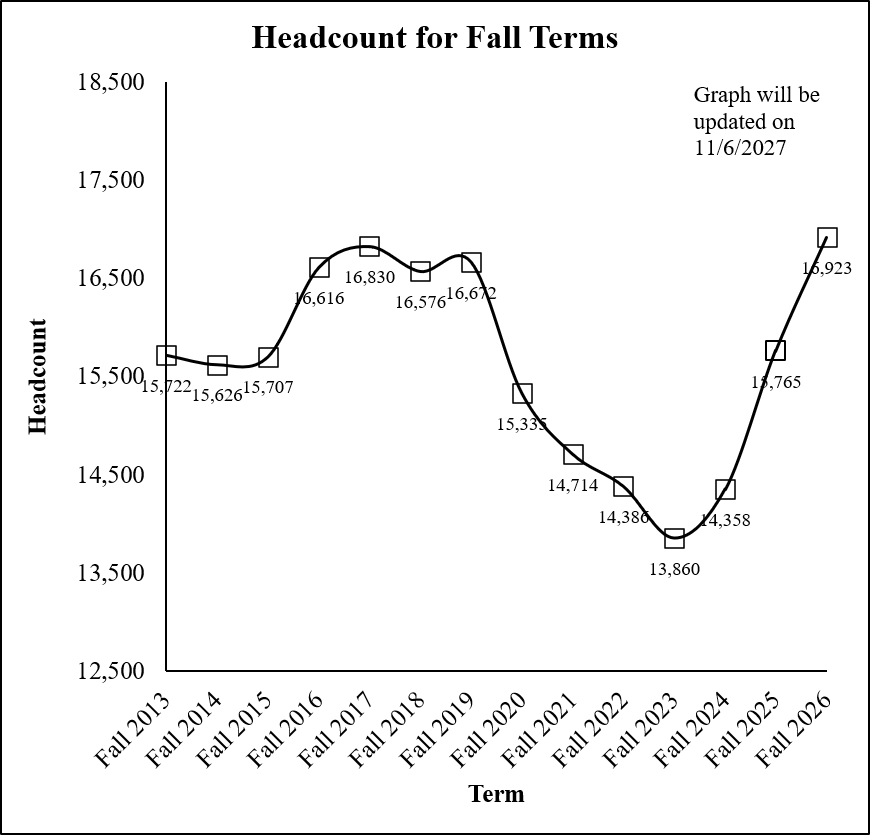
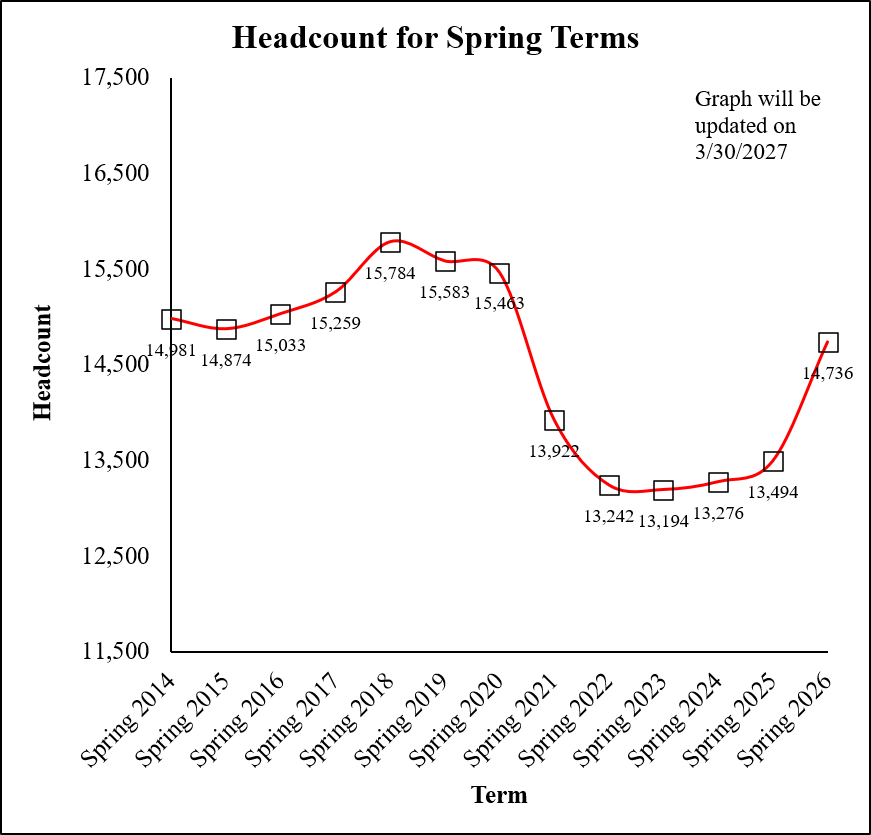
Enrollment by Term
| Academic Year | Fall | Spring | Summer |
|---|---|---|---|
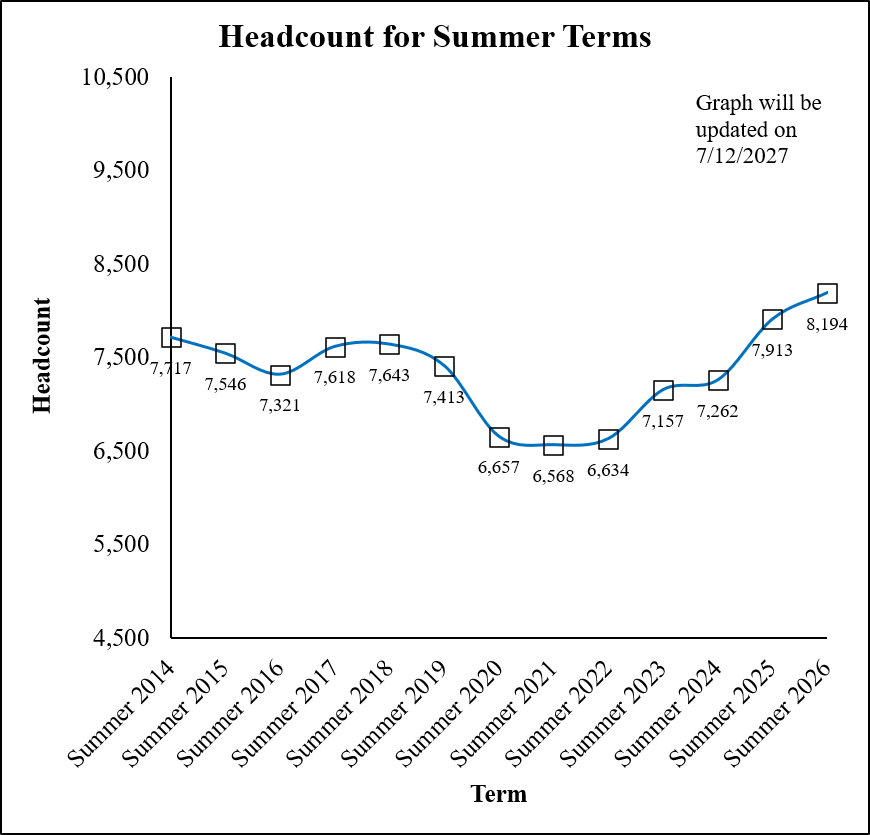
| 2016-2017 | 16,616 | 15,259 | 7,618 |
| 2017-2018 | 16,830 | 15,784 | 7,643 |
| 2018-2019 | 16,576 | 15,583 | 7,413 |
| 2019-2020 | 16,672 | 15,463 | 6,657 |
| 2020-2021 | 15,335 | 13,922 | 6,568 |
| 2021-2022 | 14,714 | 13,242 | 6,634 |
| 2022-2023 | 14,386 | 13,194 | 7,157 |
| 2023-2024 | 13,860 | 13,276 | 7,262 |
| 2024-2025 | 14,358 | 13,494 | 7,913 |
| 2025-2026 | 15,765 | 14,736 | 8,194 |
| 2026-2027 | 16,923 |
Data source: IR frozen enrollment summaries.
Academic year is considered to be Fall, Spring, Summer.
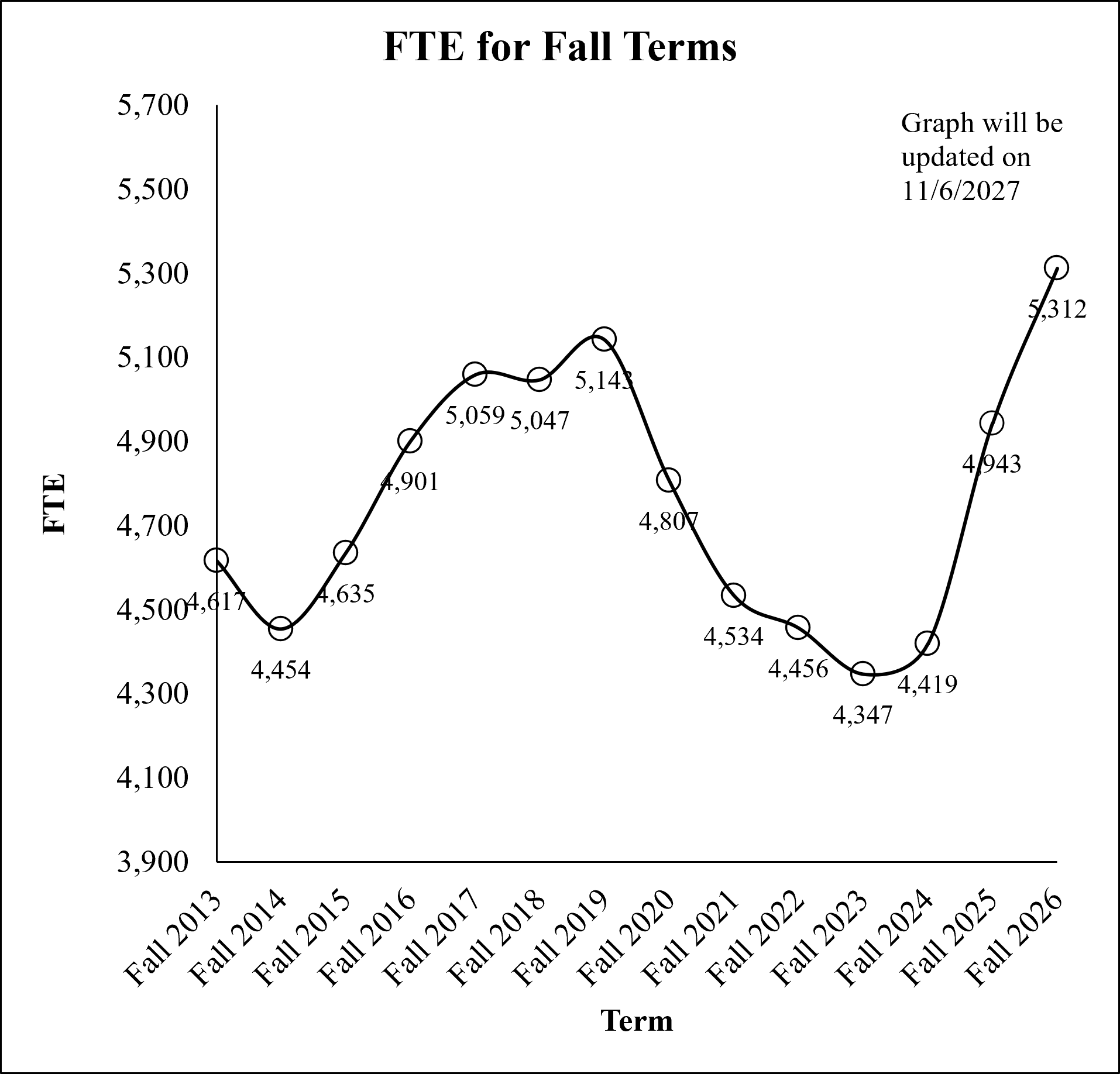
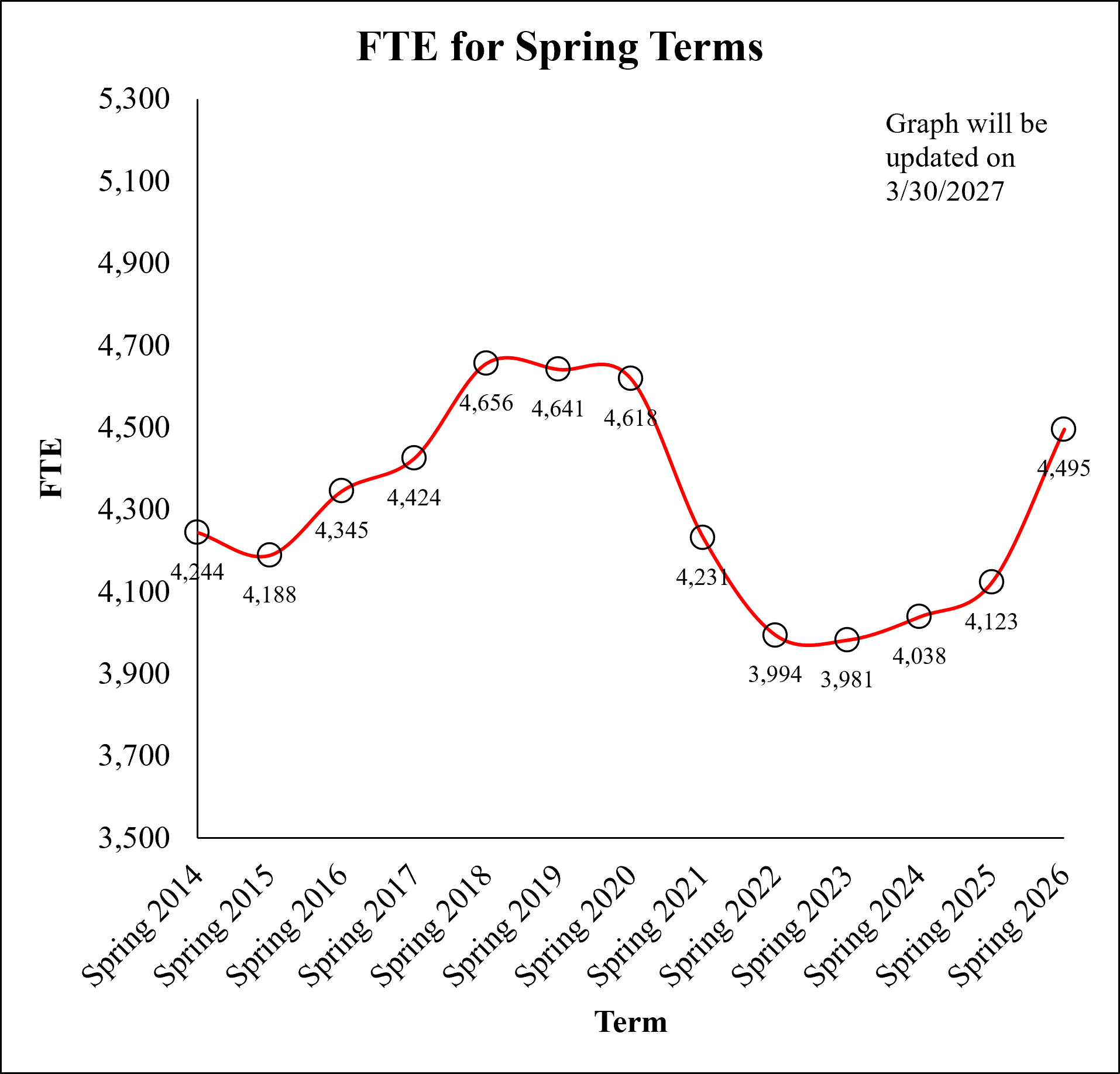
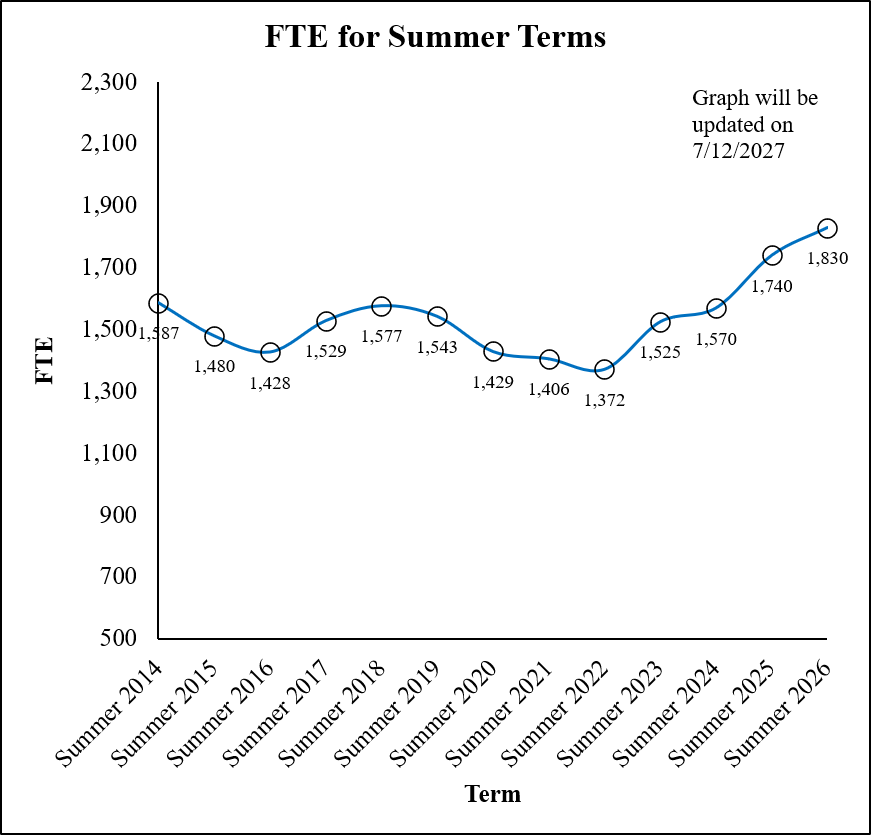
Please note that the summed FTE for a given academic year will not match the FTE-3 numbers on the General Statistics and Demographics webpage because the term data includes categories not included in the State's FTE calculations (e.g., dual enrolled in College's charter school).